

Every product that you are put in charge of developing comes with an unwelcome addition – risk. We all know that risk exists and in fact many of us have developed ways to identify risk, quantify risk, and even manage risk. However it turns out that there is something very important that very few of us have been doing – calculating how much risk a new product has and what it’s going to cost us.
Why You’ve Been Calculating Product Development Risk All Wrong
I can only speak for myself here, but when I’m placed in charge of creating a new product, the thing that I really don’t want to be thinking about is risk. Rather, I prefer to focus on just exactly how I’m going to accomplish what I’m being asked to do. It turns out that in this case, I’m probably wrong.
Every new product has some level of risk associated with it. It makes sense that as product managers we really should be aware of how much risk developing a given product has. Look, our careers are riding on this stuff and it sure seems as though we should go into it with our eyes wide open instead of squeezing them shut and hoping for the best.
What we’ve been doing is saying things like, “it’s going to cost US$10M to develop and launch this new product.” We then follow this up with another statement like “this product will generate US$500k in profit in the next 2 years. If we don’t worry about all of that time-value-of-money stuff, we then go on to say that the return-on-investment (ROI) of creating this new product is 500k / 10M = 0.05 or about 5%.
Here’s what’s wrong with this approach: you don’t know that it’s going to cost US$10M to launch the product (it may take more) and you don’t know that it’s going to generate US$500k in profits (it may bring in less). These two points are what we call the risk associated with this new product development.
How To Correctly Calculate The Risk Of Product Development
So now that you know that what you’ve been doing all along when it comes to calculating the risk associated with new projects is wrong, what should you be doing? The first thing that you need to do is to find a way to work risk into your view of the world.
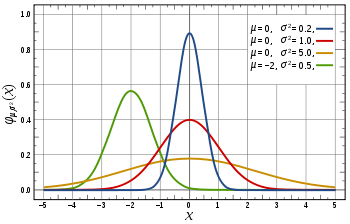
In a normal distribution you can see that the risk profile of a new product development process can take on many different shapes. The traditional shape would be a straight line that reached up to 1.0 – basically a 100% chance that the project would complete on budget and would produce the expected profits.
A normal distribution shows a more accurate real-world view. If the X-axis shows how much you’ve invested in the new product and the Y-axis shows the probability of completing the project on time and making the expected level of profit, then you can start to see how much risk you are dealing with.
In no case will you ever have a 100% guarantee that you’ll be able to stay within your budget or achieve profit goals. Some projects are more likely that others to overrun their budgets (you know what products I’m talking about here).
In the end, Armour has identified 6 different issues that product managers need to consider when we are trying to accurately calculate the amount of risk that there is in developing and launching a new product:
- Expected cost of the project
- Probability of being able to stay within that expected cost
- What the graph of the budget risk profile looks like
- Expected profitability of the new product
- Probability of being able to achieve the expected profit
- What the graph of the profit risk profile looks like
In the end, every product manager has a responsibility to know what the level of risk associated with the creation of a new product is. What you choose to do with this knowledge is your own business, but you need to make sure that you know what you are dealing with.
What All Of This Means For You
Product managers live in a world filled with risk. Although we all know this, it can be easy to forget it at times and take the simple route in which we don’t correctly calculate just how much risk we are facing when we start to develop a new product.
Our problems often stem from the fact that all too often we end up making simplifying assumptions that just aren’t valid. The two most common points that we seem to overlook when we are evaluating if we should develop a new product include forgetting to factor in our ability to complete the development on time and on budget as well as the ability of the product to generate the profits that we think that it will.
Taking the time to account for both of these risks will give product managers a more realistic view of the world that they live in. What we end up doing with this new information is our own decision; however, there is no excuse for us to not have the information in the first place.
– Dr. Jim Anderson
Blue Elephant Consulting –
Your Source For Real World Product Management Skills™
Question For You: Do you think that product managers should share this enhanced view of new product development risk with the rest of the company?
 Click here to get automatic updates when
The Accidental Product Manager Blog is updated.
P.S.: Free subscriptions to The Accidental Product Manager Newsletter are now available. It’s your product – it’s your career. Subscribe now: Click Here!
What We’ll Be Talking About Next Time
What would it take to get your customers to buy more of your product? Maybe if you offered them more choices – you know, more colors, more sizes, more brands, more flavors, etc. If they liked the new versions that you offered them, then maybe you could offer them still more versions of your product. The big question is when is more too much? Product managers need to understand that sometimes our customers really just want us to offer them less…